
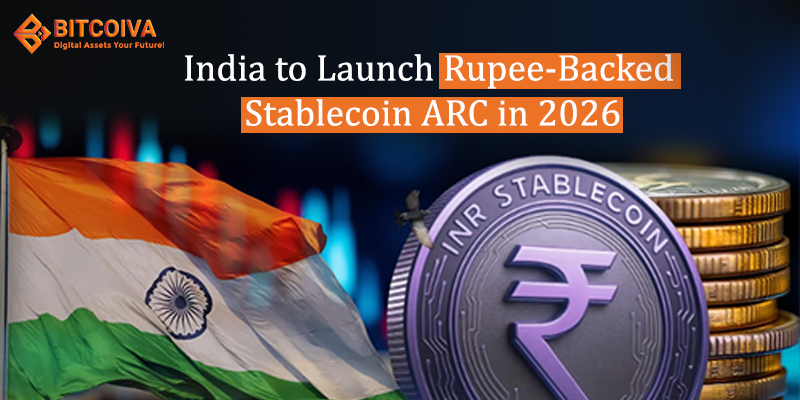
India is on the brink of a digital financial revolution. In an effort to modernize payments, remittances, and fintech innovation, the country is preparing to launch a rupee-backed stablecoin, named ARC (Asset Reserve Certificate), in Q1 2026. This fully-collateralized, regulated digital currency is designed to provide a domestic alternative to foreign stablecoins like USDT and USDC, bringing stability, transparency, and regulatory compliance to India’s blockchain ecosystem.
ARC represents a milestone in India’s digital finance journey, blending blockchain technology, government-backed assets, and regulatory oversight to create a stable, programmable digital currency for businesses, fintech firms, and institutional users.
What is ARC?
ARC is a stablecoin pegged 1:1 to the Indian Rupee (INR). Each token is backed by government securities, treasury bills, or other cash equivalents, ensuring full collateralization. Unlike cryptocurrencies such as Bitcoin, ARC is non-speculative and designed for regulated domestic use.
The project is a collaboration between Polygon, a leading blockchain infrastructure provider, and Anq, an Indian fintech firm. Polygon provides the blockchain rails, smart-contract framework, and scalability, while Anq ensures regulatory alignment and integration with India’s financial system.
Which Platforms Are Used to Build ARC?
Polygon + Anq: The Technical Backbone
- Polygon Blockchain: Provides scalability, Ethereum Virtual Machine (EVM) compatibility, and smart-contract capabilities for ARC. This allows the stablecoin to be programmable, secure, and easily integrated with fintech applications.
- Anq Fintech Infrastructure: Handles reserve management, compliance, integration with financial regulations, and ensures that ARC aligns with domestic monetary policies.
Dual-Layer Architecture
ARC uses a two-layer model:
- CBDC Layer: The base layer remains the RBI’s Digital Rupee (CBDC), acting as the legal settlement and central ledger.
- Programmable Layer (ARC): Built on Polygon, this layer enables faster payments, remittances, and smart-contract-based financial solutions, while maintaining compliance and traceability.
Why India Needs ARC
Reducing Dependency on Foreign Stablecoins
Millions of Indians currently use dollar-backed stablecoins for digital payments and cross-border remittances, exposing them to currency and regulatory risks. ARC offers a domestic, rupee-pegged alternative that retains liquidity within India.
Supporting Government Securities and Domestic Finance
Each ARC token is backed by Indian government securities or treasury bills. This not only ensures stability but also boosts demand for domestic debt instruments, potentially aiding government borrowing programs.
Encouraging Fintech Innovation
By providing a programmable, blockchain-based stablecoin, ARC enables fintech startups and businesses to create innovative solutions, including faster payments, low-cost remittances, and smart-contract applications, without compromising regulatory compliance.
Key Features and Advantages of ARC
- Stable and Fully Collateralized: Each token is backed by real-world assets.
- Regulated Issuance: Only authorized institutions can mint ARC tokens.
- Programmable for Fintech Solutions: Supports smart contracts, remittances, and business payments.
- Domestic Sovereignty: Pegged to the rupee, reducing reliance on foreign stablecoins.
- Fast and Cost-Efficient Transactions: Blockchain infrastructure allows low-cost, rapid transfers.
Potential Impact on Businesses and the Economy
- Faster Payments & Remittances: Reduced transaction costs and settlement times.
- Financial Inclusion: SMEs and fintechs can leverage ARC for new products and services.
- Strengthened Domestic Liquidity: Keeps stablecoin funds tied to Indian sovereign assets.
- Regulatory Compliance: Ensures traceable, secure transactions aligned with monetary policy.
Challenges and Considerations
- Regulatory Clarity: Clear guidelines for issuance, redemption, KYC/AML compliance, and audits are essential.
- Institutional Adoption: Widespread adoption by banks, fintechs, and enterprises is critical for liquidity and utility.
- Public Trust and Education: Users need transparency and awareness to adopt ARC confidently.
- Technical Integration: Combining Polygon blockchain with legacy financial systems and ensuring security is complex.
Conclusion
The launch of ARC in Q1 2026 represents a major step in India’s digital finance evolution. Built on Polygon’s blockchain and backed by Indian government securities, ARC offers a stable, programmable, and compliant alternative to foreign stablecoins.
By empowering businesses, fintech startups, and institutions while maintaining monetary sovereignty, ARC could reshape India’s payments, remittances, and digital finance landscape, ushering in a new era of blockchain-powered economic growth.
Visit us as: www.bitcoiva.com
FAQs
Q1. What is ARC?
ARC is a rupee-backed stablecoin fully collateralized by government securities or cash equivalents, designed for regulated domestic transactions.
Q2. When will ARC be launched?
The stablecoin is expected to launch in Q1 2026.
Q3. Who is developing ARC?
ARC is a collaboration between Polygon and Anq, combining blockchain technology and Indian fintech expertise.
Q4. How is ARC different from Bitcoin or USDT?
ARC is stable, backed by Indian assets, and regulated. Unlike USDT/USDC, it’s rupee-denominated and designed for domestic use.
Q5. Who can mint ARC tokens?
Only authorized institutions or corporate/institutional accounts can mint ARC, ensuring regulatory compliance.
Q6. Will ARC replace the digital rupee (CBDC)?
No — ARC complements the RBI’s digital rupee, providing a programmable layer for fintech applications.
Q7. What are the benefits for businesses?
ARC enables faster payments, lower costs, supports financial inclusion, and strengthens domestic liquidity while ensuring compliance.