
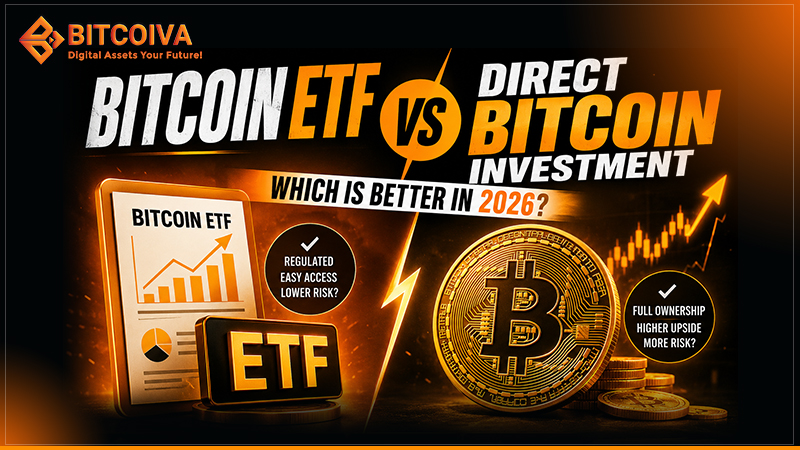
Bitcoin has evolved from a niche digital asset into one of the world’s most recognized investment opportunities. In 2026, investors have more ways than ever to gain exposure to Bitcoin, with two of the most popular options being Bitcoin Exchange-Traded Funds (ETFs) and direct Bitcoin ownership.
As institutional adoption continues to grow and cryptocurrency becomes increasingly mainstream, many investors are asking an important question:
Should you invest in a Bitcoin ETF or buy Bitcoin directly?
The answer depends on your investment goals, risk tolerance, ownership preferences, and long-term strategy. This guide explores the key differences between Bitcoin ETFs and direct Bitcoin investment to help you make an informed decision.
What Is a Bitcoin ETF?
A Bitcoin ETF is an investment fund that tracks the price of Bitcoin and trades on traditional stock exchanges. Instead of purchasing and storing Bitcoin yourself, you buy shares of the ETF through a brokerage account.
The ETF provider manages the Bitcoin holdings and security, allowing investors to gain exposure to Bitcoin’s price movements without directly owning the cryptocurrency.
Key Characteristics of Bitcoin ETFs
- Traded through stock exchanges
- No need to manage crypto wallets
- Regulated investment structure
- Suitable for traditional investors
- Easy integration into retirement and brokerage accounts
What Is Direct Bitcoin Investment?
Direct Bitcoin investment involves purchasing actual Bitcoin through a cryptocurrency exchange and storing it in a digital wallet.
When you buy Bitcoin directly, you own the underlying asset and have complete control over how it is stored, transferred, and used.
Key Characteristics of Direct Bitcoin Ownership
- Full ownership of Bitcoin
- Ability to transfer funds globally
- Access to self-custody wallets
- Participation in the broader crypto ecosystem
- No intermediary controlling your assets
Bitcoin ETF vs Direct Bitcoin Investment: Key Differences
| Feature | Bitcoin ETF | Direct Bitcoin Investment |
|---|---|---|
| Ownership | Own ETF shares | Own actual Bitcoin |
| Storage | Managed by ETF provider | Managed by investor |
| Trading Hours | Stock market hours | 24/7 crypto markets |
| Wallet Required | No | Yes |
| Transfer Bitcoin | No | Yes |
| Fees | Management fees | Exchange fees |
| Self-Custody | Not available | Available |
| Accessibility | Brokerage account | Crypto exchange account |
Advantages of Investing Through a Bitcoin ETF
Bitcoin ETFs have become popular among traditional investors because they simplify exposure to cryptocurrency.
1. Simplicity
Investors can buy Bitcoin ETF shares just like stocks without learning about wallets, private keys, or blockchain technology.
2. Regulated Environment
ETFs operate within established financial markets and regulatory frameworks, providing additional familiarity for many investors.
3. Portfolio Integration
Bitcoin ETFs can be included alongside stocks, bonds, and other assets within traditional investment accounts.
4. Reduced Security Responsibilities
Investors do not need to worry about securing private keys or managing crypto wallets.
5. Suitable for Retirement Accounts
Many investors use Bitcoin ETFs within retirement portfolios and long-term investment strategies.
Advantages of Direct Bitcoin Investment
Direct ownership remains the preferred option for many cryptocurrency enthusiasts and long-term believers.
1. True Ownership
When you purchase Bitcoin directly, you own the asset rather than shares representing its value.
A common saying in crypto is:
“Not your keys, not your coins.”
Direct ownership gives investors complete control over their holdings.
2. 24/7 Market Access
Unlike stock markets, cryptocurrency markets operate around the clock.
Investors can buy or sell Bitcoin at any time, including weekends and holidays.
3. Self-Custody Control
Bitcoin holders can store their assets in private wallets, reducing reliance on third-party institutions.
4. Global Transferability
Bitcoin can be transferred across borders quickly without traditional banking limitations.
5. Participation in the Crypto Economy
Direct ownership enables users to interact with various blockchain applications, decentralized finance platforms, and future innovations.
Which Option Has Lower Fees?
Fee structures vary depending on providers and platforms.
Bitcoin ETF Fees
Typically include:
- Annual management fees
- Brokerage fees
- Trading commissions (where applicable)
Direct Bitcoin Investment Fees
Typically include:
- Exchange trading fees
- Withdrawal fees
- Optional wallet costs
For long-term investors, management fees associated with ETFs can accumulate over time.
Direct Bitcoin ownership may offer greater cost efficiency, particularly for investors planning to hold assets for several years.
Security Comparison
Security is often one of the biggest concerns for new investors.
Bitcoin ETF Security
Advantages:
- Institutional-grade custody
- Professional asset management
- Reduced risk of losing private keys
Disadvantages:
- Dependence on third-party providers
- No direct control over Bitcoin
Direct Bitcoin Security
Advantages:
- Complete control of assets
- Ability to use cold storage wallets
Disadvantages:
- Responsibility for safeguarding private keys
- Risk of permanent loss if security practices are poor
Which Option Offers More Flexibility?
Direct Bitcoin ownership offers significantly more flexibility.
With direct ownership, investors can:
- Transfer Bitcoin globally
- Store assets independently
- Use Bitcoin for payments
- Access decentralized applications
- Participate in emerging blockchain ecosystems
Bitcoin ETFs primarily serve as investment vehicles and do not provide these additional capabilities.
Tax Considerations
Tax treatment varies depending on your country and local regulations.
Investors should consult qualified tax professionals before making investment decisions.
Generally:
Bitcoin ETF Investors
- Often follow traditional securities taxation rules.
Direct Bitcoin Investors
- May face taxation on trading, transfers, or capital gains depending on local laws.
Understanding regulatory requirements is essential before investing.
Who Should Choose a Bitcoin ETF?
A Bitcoin ETF may be suitable if you:
- Prefer traditional investing methods
- Already use brokerage accounts
- Want simplified Bitcoin exposure
- Do not want to manage crypto wallets
- Are focused solely on price appreciation
Who Should Buy Bitcoin Directly?
Direct Bitcoin ownership may be suitable if you:
- Want complete control over your assets
- Believe in decentralized finance
- Plan to hold Bitcoin long term
- Want access to the broader crypto ecosystem
- Prefer self-custody solutions
Why Many Investors Prefer Direct Bitcoin Ownership
As Bitcoin adoption grows, many experienced investors continue to prefer direct ownership because it aligns with the original purpose of cryptocurrency:
- Financial sovereignty
- Ownership without intermediaries
- Borderless transactions
- Greater control over assets
While ETFs provide convenience, direct ownership allows investors to fully participate in the Bitcoin ecosystem.
Frequently Asked Questions
Is a Bitcoin ETF safer than owning Bitcoin directly?
Bitcoin ETFs may feel safer for beginners because custody is handled by professional institutions. However, direct ownership provides greater control when proper security practices are followed.
Can I transfer Bitcoin from an ETF to a wallet?
No. Bitcoin ETFs generally provide exposure to Bitcoin’s price but do not allow investors to withdraw actual Bitcoin into personal wallets.
Which option is better for long-term investors?
Many long-term Bitcoin supporters prefer direct ownership because it offers full control and eliminates ongoing ETF management fees.
Do Bitcoin ETFs affect Bitcoin prices?
Yes. Large inflows and outflows from Bitcoin ETFs can influence market demand and impact Bitcoin prices.
Can beginners invest in Bitcoin directly?
Yes. Modern cryptocurrency exchanges have made purchasing and storing Bitcoin more user-friendly than ever before.
Final Verdict: Bitcoin ETF vs Direct Bitcoin Investment
Both Bitcoin ETFs and direct Bitcoin ownership provide exposure to the world’s largest cryptocurrency, but they serve different types of investors.
Choose a Bitcoin ETF if you value simplicity, traditional investing, and institutional management.
Choose Direct Bitcoin Ownership if you want true asset ownership, greater flexibility, and participation in the broader cryptocurrency ecosystem.
For investors who believe in the long-term future of Bitcoin and blockchain technology, direct ownership remains one of the most powerful ways to gain exposure to the digital asset revolution.
As always, investors should conduct thorough research, understand the risks involved, and align investment decisions with their financial goals.