
Introduction
When people buy or trade cryptocurrency, one of the most important questions they ask is: How safe is a crypto exchange?
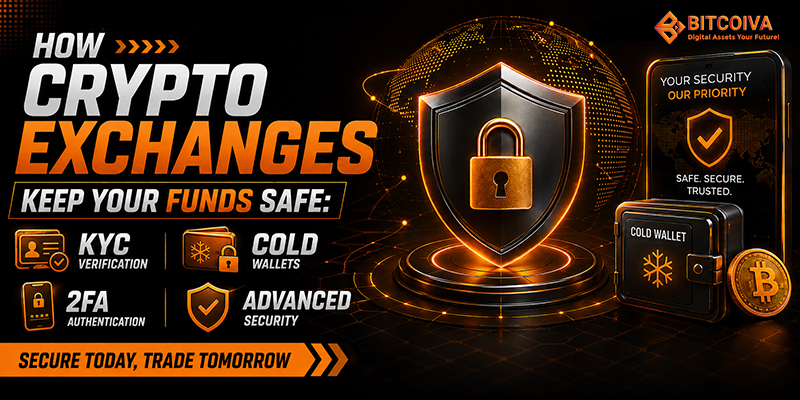
Crypto exchanges use multiple layers of security to help protect user accounts, personal information, transactions, and digital assets. These measures can include Know Your Customer (KYC) verification, two-factor authentication (2FA), cold wallet storage, encryption, transaction monitoring, withdrawal controls, and Anti-Money Laundering (AML) procedures.
However, crypto security is a shared responsibility. A secure exchange can reduce many risks, but users must also protect their passwords, devices, and account credentials. Understanding how crypto exchanges keep funds safe can help both beginners and experienced traders make more informed decisions.
What Is Crypto Exchange Security?
Crypto exchange security refers to the technologies, processes, and policies used by cryptocurrency exchanges to protect user accounts and digital assets from unauthorized access, fraud, theft, and other security threats.
A centralized crypto exchange typically combines technical security controls with identity verification, transaction monitoring, and compliance procedures.
Security does not depend on one feature. Instead, multiple layers work together to create a safer environment for cryptocurrency trading and asset management.
1. KYC: Verifying User Identity
KYC, or Know Your Customer, is an identity verification process used by many cryptocurrency exchanges.
Depending on the platform and applicable regulations, users may be required to provide information such as government-issued identification and other verification details.
KYC helps exchanges establish customer identity, reduce certain types of fraudulent activity, and support applicable Anti-Money Laundering (AML) and regulatory requirements.
For users, KYC is therefore more than simply an account-opening step. It is part of the broader security and compliance framework used by many centralized crypto exchanges.
2. Two-Factor Authentication (2FA)
A password alone may not provide enough protection for a cryptocurrency account. Two-factor authentication (2FA) adds another verification step when users log in or perform certain sensitive actions.
Depending on the exchange, 2FA may use an authenticator application, security key, passkey, SMS verification, or another authentication method.
Enabling 2FA can help reduce the risk of unauthorized account access if a password is exposed. Users should also keep their authentication devices and recovery credentials secure.
3. Cold Wallets and Offline Storage
Cold storage is an important concept in cryptocurrency security.
A hot wallet is connected to the internet and is convenient for frequent transactions. A cold wallet keeps private keys offline, reducing exposure to certain online threats.
Crypto exchanges may use cold storage for assets that do not need to remain immediately accessible for everyday transactions. The exact custody architecture varies between platforms, so users should review an exchange’s available information about its wallet and asset-management practices.
Cold storage can provide an additional layer of protection, but it is only one part of a broader exchange security strategy.
4. Hot Wallets for Trading Liquidity
Crypto exchanges also need access to digital assets to process deposits, withdrawals, and trading activity.
Hot wallets are connected to the internet and can provide faster access to funds required for operational transactions.
Because online wallets can face internet-based security risks, exchanges need appropriate controls and monitoring around their use.
This creates a balance between security, liquidity, accessibility, and operational efficiency.
5. Withdrawal and Transaction Controls
Withdrawal security is another important part of protecting cryptocurrency assets.
Exchanges may use controls such as withdrawal confirmations, address allowlists, device verification, security notifications, transaction monitoring, and additional authentication for sensitive actions.
These measures can help reduce the potential impact of unauthorized account access or suspicious activity.
Users should also carefully verify the destination wallet address before confirming a transaction. Cryptocurrency transfers generally cannot be reversed once they have been confirmed on a blockchain.
6. Encryption and Account Protection
Crypto exchanges handle sensitive information, including personal data, account credentials, and transaction information.
Security systems can use encryption and other technical safeguards to help protect information during transmission and storage.
Users should also secure the email account connected to their exchange account. If an attacker gains access to an email account, they may attempt to reset passwords or compromise connected services.
Using a strong, unique password together with 2FA provides a stronger foundation for crypto account security.
7. AML and Transaction Monitoring
AML, or Anti-Money Laundering, procedures are another important part of cryptocurrency exchange compliance.
Exchanges may monitor transactions and account activity to identify patterns that could indicate fraud, money laundering, or other suspicious behavior.
KYC and AML procedures can help exchanges meet applicable regulatory requirements and establish controls around digital asset activity.
However, these systems cannot eliminate every possible security or financial risk. Users should continue to follow good security practices when managing cryptocurrency.
8. How to Choose a Secure Crypto Exchange
Before selecting a cryptocurrency exchange, users should look beyond trading fees and the number of supported cryptocurrencies.
Consider these important factors:
- Security: Does the exchange clearly explain its security practices?
- KYC and compliance: Does it follow applicable regulatory requirements?
- Account protection: Are 2FA and other authentication options available?
- Wallet security: Does the platform explain how digital assets are stored?
- Withdrawal protection: Are security controls available for sensitive transactions?
- Transparency: Does the exchange provide clear information about its policies?
- Customer support: Can users access assistance when they face account or transaction issues?
A combination of appropriate security controls, compliance practices, transparency, and responsible user behavior provides a stronger foundation for safer crypto trading.
How Bitcoiva Helps Protect Your Crypto Assets
At Bitcoiva, security is an important part of the cryptocurrency trading experience, with multiple measures designed to help protect user accounts and digital assets. The platform incorporates KYC verification, two-factor authentication (2FA), wallet-security practices, transaction monitoring, and compliance-focused procedures. These measures work together to support a safer trading environment, while users should also enable 2FA, use strong passwords, verify transactions carefully, and never share passwords or private keys.
visit: www.bitcoiva.com
Conclusion
Crypto exchange security is built from multiple layers rather than a single technology. KYC helps establish user identity, 2FA strengthens account access, and cold storage can reduce exposure to certain online threats. Encryption, transaction monitoring, AML procedures, and withdrawal controls can provide additional safeguards.
At the same time, users remain an essential part of the security process. Strong passwords, two-factor authentication, phishing awareness, careful transaction verification, and responsible handling of account credentials can significantly improve personal crypto security.
As cryptocurrency adoption continues to grow, understanding how crypto exchanges protect your funds is increasingly important. Whether you are a beginner buying Bitcoin or an experienced trader managing digital assets, learning about exchange security can help you make more informed decisions and develop safer crypto habits.
When choosing a cryptocurrency exchange, don’t focus only on fees or the number of supported coins. Consider the platform’s security measures, compliance practices, transparency, account protection, and asset-management approach to make a more informed decision.
Visit: www.bitcoiva.com
Frequently Asked Questions
How do crypto exchanges keep funds safe?
Crypto exchanges can use multiple security layers, including KYC, 2FA, cold storage, encryption, transaction monitoring, withdrawal controls, and AML procedures.
Are crypto exchanges completely safe?
No. No online platform can guarantee protection against every possible threat. Users should evaluate an exchange’s security practices and take appropriate steps to protect their own accounts and devices.
What is cold storage in cryptocurrency?
Cold storage means keeping cryptocurrency private keys offline. This can reduce exposure to certain internet-based threats and is commonly used for assets that do not require immediate online access.
Why is KYC important on crypto exchanges?
KYC helps exchanges verify customer identities, reduce certain types of fraud, and support applicable AML and regulatory requirements.
Is 2FA important for crypto accounts?
Yes. Two-factor authentication adds another layer of protection beyond a password and can help reduce the risk of unauthorized account access.
What is the difference between a hot wallet and a cold wallet?
A hot wallet is connected to the internet and is generally convenient for frequent transactions. A cold wallet keeps private keys offline and reduces exposure to certain online threats.
How can I protect my crypto exchange account?
Use a strong and unique password, enable 2FA, secure your email account, avoid suspicious links, verify wallet addresses before sending funds, keep your devices updated, and never share private keys or recovery phrases.