
The cryptocurrency market is known for its rapid price movements and recurring market cycles. While market downturns can be challenging for investors, history has shown that periods of decline are often followed by phases of recovery and renewed growth. However, identifying the beginning of a recovery is never straightforward.
Rather than relying on speculation or market rumors, experienced investors often analyze multiple indicators to better understand the overall direction of the market. Although no single indicator can accurately predict future price movements, several market signals have historically suggested improving conditions.
Understanding these indicators can help investors make informed decisions, reduce emotional investing, and gain a clearer picture of the broader cryptocurrency market.
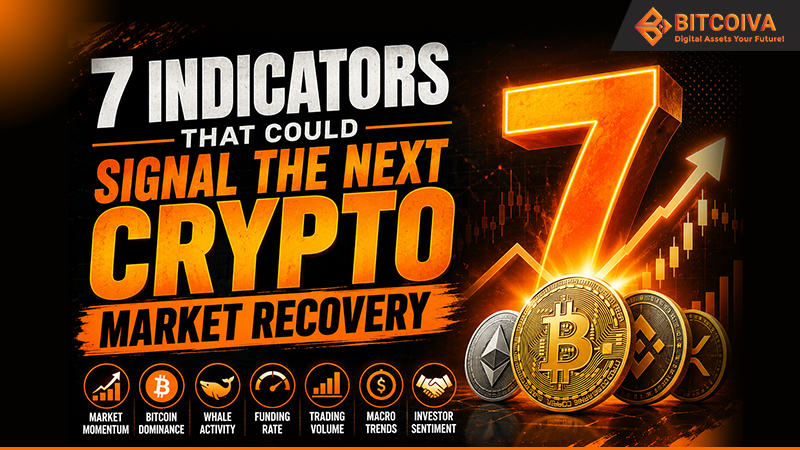
In this guide, we’ll explore seven important indicators that could signal the next crypto market recovery and explain why each one matters.
Quick Overview
| Indicator | Why It Matters |
|---|---|
| Bitcoin Price Stability | Often reflects renewed investor confidence and reduced selling pressure. |
| Rising Trading Volume | Indicates stronger market participation and liquidity. |
| Positive Market Sentiment | Suggests improving confidence among investors. |
| Increased On-Chain Activity | Demonstrates higher blockchain usage and adoption. |
| Institutional Adoption | Brings long-term investment and credibility to the market. |
| Positive Regulatory Developments | Encourages wider adoption and investor trust. |
| Blockchain Innovation | Expands real-world use cases and strengthens the ecosystem. |
1. Bitcoin Begins to Stabilize After a Downtrend
Bitcoin remains the largest cryptocurrency by market capitalization and often sets the tone for the broader digital asset market. During prolonged market corrections, Bitcoin typically experiences significant price declines alongside other cryptocurrencies.
One of the earliest signs of a potential recovery is when Bitcoin begins to stabilize instead of creating lower lows. This may indicate that selling pressure is decreasing while buyers gradually regain confidence.
Although short-term price fluctuations are common, consistent price stability and the formation of higher lows often suggest healthier market conditions.
Why It Matters
- Reduced panic selling.
- Stronger buying activity.
- Improved market confidence.
- Positive influence on other cryptocurrencies.
2. Trading Volume Starts Increasing
Trading volume represents the total amount of cryptocurrency being bought and sold within a specific period.
During bearish markets, trading volume often declines because investors become cautious and wait for clearer market direction. As confidence returns, trading activity usually increases.
Higher trading volume supports price movements by showing that more participants are actively entering the market rather than prices rising due to limited transactions.
What to Watch
- Consistent increases in daily trading volume.
- Strong buying activity.
- Improved liquidity across major exchanges.
- Healthy market participation.
3. Market Sentiment Turns Positive
Investor sentiment plays an important role in cryptocurrency markets. News events, macroeconomic conditions, regulatory announcements, and technological developments can all influence market confidence.
During recovery phases, market sentiment often shifts from fear toward cautious optimism. Investors begin focusing on long-term opportunities instead of reacting to short-term volatility.
Positive sentiment alone does not guarantee a market recovery, but it often accompanies improving market conditions.
Signs of Improving Sentiment
- Reduced fear among investors.
- Increased long-term holding.
- Positive discussions within the crypto community.
- Growing confidence in blockchain projects.
4. On-Chain Activity Begins to Grow
Unlike traditional financial markets, blockchain networks provide transparent data that anyone can analyze.
Metrics such as active wallet addresses, transaction counts, network fees, and staking participation help measure the health of a blockchain ecosystem.
When these metrics begin increasing, they often indicate genuine user engagement rather than speculative trading.
Important On-Chain Metrics
- Active wallet addresses.
- Daily transactions.
- Network transaction value.
- Smart contract usage.
- Growth in decentralized applications.
- Increased staking activity.
Growing on-chain activity often reflects stronger adoption and increased confidence in blockchain technology.
5. Institutional Adoption Continues to Grow
Institutional participation has become one of the most closely watched indicators in the cryptocurrency market. Large financial institutions, asset managers, and publicly traded companies often conduct extensive research before investing in digital assets.
When institutional interest increases, it can bring greater liquidity, improved market confidence, and long-term capital into the crypto ecosystem. While institutional investments do not guarantee an immediate market recovery, they often reflect growing confidence in the long-term potential of blockchain technology.
What to Watch
- Increased participation from financial institutions.
- Expansion of crypto investment products.
- Corporate adoption of digital assets.
- Strategic partnerships between blockchain companies and traditional finance.
A steady increase in institutional involvement can contribute to a stronger and more mature cryptocurrency market over time.
6. Positive Regulatory Developments
Regulation has long been one of the biggest factors influencing cryptocurrency markets. While regulatory announcements can create short-term uncertainty, clear and balanced regulations often support long-term industry growth.
When governments introduce transparent policies, investors and businesses gain greater confidence in participating in the crypto ecosystem. Regulatory clarity can also encourage innovation while helping reduce fraud and improve consumer protection.
Positive Regulatory Signals
- Clear cryptocurrency regulations.
- Improved investor protection.
- Licensing frameworks for crypto businesses.
- Support for blockchain innovation.
- Greater compliance standards across the industry.
A well-regulated environment can strengthen trust and encourage wider adoption of digital assets.
7. Blockchain Innovation and Ecosystem Growth
One of the strongest indicators of a healthy cryptocurrency market is continued innovation. Even during market downturns, developers often continue building new blockchain applications, decentralized finance (DeFi) platforms, Web3 projects, and digital infrastructure.
As new technologies emerge and blockchain adoption expands across industries, the overall ecosystem becomes stronger. Continued innovation demonstrates that the industry is evolving beyond short-term price movements.
Areas of Growth
- Layer-2 scaling solutions.
- Decentralized Finance (DeFi).
- Real-World Asset (RWA) tokenization.
- Blockchain gaming.
- Artificial Intelligence (AI) integration.
- Enterprise blockchain solutions.
- Cross-chain interoperability.
Strong development activity often lays the foundation for future market growth by increasing the real-world utility of blockchain technology.
Key Takeaways
| Indicator | Why It Matters |
| Bitcoin Price Stability | Suggests selling pressure may be easing. |
| Rising Trading Volume | Indicates stronger market participation. |
| Positive Market Sentiment | Reflects improving investor confidence. |
| Increased On-Chain Activity | Demonstrates growing blockchain adoption. |
| Institutional Adoption | Brings long-term investment and credibility. |
| Regulatory Clarity | Supports sustainable industry growth. |
| Blockchain Innovation | Expands real-world use cases and ecosystem development. |
Conclusion
A cryptocurrency market recovery is rarely driven by a single event. Instead, it is often supported by a combination of improving market conditions, stronger investor confidence, increased blockchain activity, and continued technological innovation.
The seven indicators discussed in this guide should not be viewed as guarantees of future price movements. Rather, they provide valuable insights that can help investors better understand changing market dynamics and make more informed decisions.
Successful investing requires patience, research, and a long-term perspective. By monitoring multiple indicators instead of reacting to short-term market volatility, investors can gain a clearer understanding of how the cryptocurrency market evolves over time.
Whether you are a beginner exploring digital assets or an experienced investor, staying informed remains one of the most valuable strategies for navigating the ever-changing crypto landscape.
Frequently Asked Questions (FAQs)
1. What is a crypto market recovery?
A crypto market recovery is a period when cryptocurrency prices begin to regain strength after a prolonged decline. It is typically supported by improving investor confidence, increased trading activity, and stronger market fundamentals.
2. Can anyone accurately predict a crypto market recovery?
No. Cryptocurrency markets are highly volatile and influenced by many factors, including economic conditions, regulations, investor sentiment, and technological developments. Indicators can provide guidance but cannot guarantee future market performance.
3. Why is Bitcoin important during a market recovery?
Bitcoin is the largest cryptocurrency and often influences the overall direction of the digital asset market. Improvements in Bitcoin’s performance may indicate stronger confidence across the broader crypto ecosystem.
4. Does higher trading volume always indicate a recovery?
Not always. While higher trading volume often reflects stronger market participation, it should be analyzed together with price trends, investor sentiment, and other market indicators.
5. How do regulations affect cryptocurrency markets?
Clear regulations can improve investor confidence, encourage institutional participation, and support the long-term growth of the cryptocurrency industry by providing greater transparency and consumer protection.
6. Should investors rely on a single market indicator?
No. Successful investors typically evaluate multiple indicators together. Combining market data with thorough research provides a more balanced understanding of potential market conditions.
Disclaimer
This blog is for educational and informational purposes only and should not be considered financial or investment advice. Cryptocurrency investments involve risk, and readers should conduct their own research or consult a qualified financial advisor before making any investment decisions.