Introduction
The altcoin market continues to attract attention as blockchain projects expand into areas such as decentralized finance, artificial intelligence, payments, gaming, real-world asset tokenization and Web3 infrastructure.
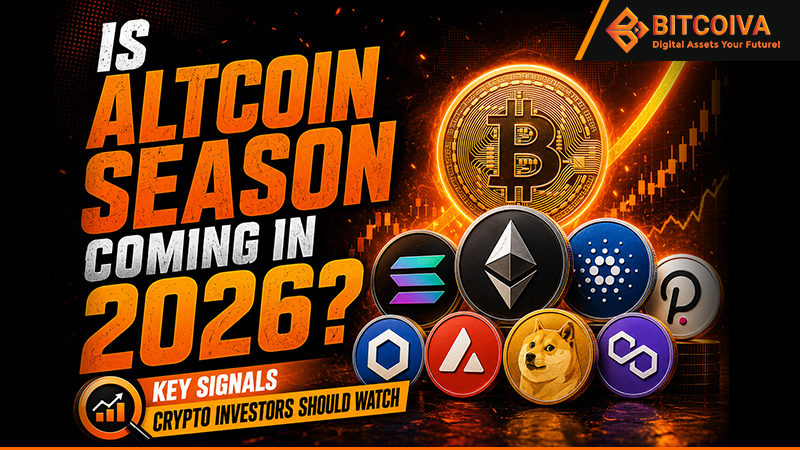
Altcoin Season, also known as Altseason, is a period when a large number of altcoins experience stronger market activity, rising trading volume and increased investor interest.
Not every altcoin performs equally during this period. Some projects may grow because of real adoption, ecosystem development or strong market demand, while others may rise mainly because of short-term speculation.
This blog explains what Altcoin Season means, why it may happen in 2026 and the key signals investors should monitor.
What Is an Altcoin?
An altcoin is any cryptocurrency created as an alternative digital asset with its own purpose, technology or blockchain ecosystem.
Different altcoins are designed for different use cases.
Some altcoins support:
- Smart contracts
- Decentralized applications
- Digital payments
- Blockchain gaming
- Artificial intelligence
- Decentralized finance
- Real-world asset tokenization
- Data storage
- Cross-chain communication
- Web3 infrastructure
Popular altcoins include:
- Ethereum (ETH)
- Solana (SOL)
- XRP
- Cardano (ADA)
- Chainlink (LINK)
- Avalanche (AVAX)
- Sui (SUI)
- Aptos (APT)
- Polygon (POL)
What Is Altcoin Season?
Altcoin Season is a market period when many altcoins experience increased demand, stronger price movement and higher trading activity.
During Altcoin Season, investors may begin exploring multiple blockchain sectors rather than focusing on only one type of cryptocurrency.
Interest may spread across:
- Large-cap altcoins
- Smart contract platforms
- DeFi tokens
- AI-related tokens
- Gaming tokens
- Meme coins
- Payment tokens
- Real-world asset tokens
- Layer-2 tokens
A healthy Altcoin Season usually involves growth across several established projects and blockchain sectors.
Why Could Altcoin Season Happen in 2026?
Several developments could support stronger interest in altcoins during 2026.
Blockchain networks are becoming faster, more scalable and more affordable. Developers are building new products for payments, finance, gaming, data management, artificial intelligence and digital ownership.
Institutional interest in blockchain technology may also increase demand for projects with strong use cases and active ecosystems.
However, Altcoin Season is never guaranteed. Investors should monitor market data, project fundamentals and wider industry developments before making decisions.
Key Signals of Altcoin Season in 2026
1. Altcoin Market Capitalization Increases
Altcoin market capitalization represents the combined value of cryptocurrencies outside the largest dominant digital assets.
When the total value of altcoins rises steadily, it may indicate that more capital is entering the altcoin market.
A broad increase across multiple projects is generally more meaningful than a sudden rise in only one token.
2. Ethereum Shows Strong Market Momentum
Ethereum is one of the largest and most influential altcoin ecosystems.
It supports:
- Smart contracts
- Decentralized finance
- NFTs
- Stablecoins
- Blockchain applications
- Layer-2 networks
- Tokenized assets
When Ethereum experiences strong network activity, growing adoption and increased trading volume, it can improve confidence across the broader altcoin market.
3. Trading Volume Rises Across Multiple Altcoins
Trading volume measures how actively an asset is being bought and sold.
When trading volume increases across Ethereum, Solana, XRP, Cardano, Chainlink and other established altcoins, it may indicate stronger market participation.
Healthy trading volume can also improve liquidity and make it easier for users to enter or exit positions.
4. More Altcoins Show Consistent Growth
Altcoin Season is not usually defined by one token increasing rapidly.
A stronger signal appears when multiple altcoins across different sectors show sustained growth.
For example, investors may see positive movement in:
- Smart contract platforms
- DeFi projects
- AI tokens
- Real-world asset tokens
- Gaming projects
- Payment-focused cryptocurrencies
Broad participation may indicate that the altcoin market is becoming more active.
5. Stablecoin Liquidity Expands
Stablecoins such as USDT and USDC are widely used for crypto trading.
When stablecoin liquidity grows, more capital may become available for trading altcoins.
This liquidity can support stronger activity across exchanges, decentralized platforms and blockchain ecosystems.
Stablecoin growth is therefore one of the important signals investors can monitor.
6. Blockchain Adoption Continues Growing
Altcoins often gain attention when their networks show practical use and growing adoption.
Important adoption indicators include:
- More active users
- Higher transaction volume
- Growing developer activity
- New decentralized applications
- Ecosystem partnerships
- Increased total value locked
- Real-world integrations
- Enterprise adoption
Projects with useful technology and active communities may attract stronger long-term interest.
7. New Altcoin Sectors Gain Popularity
Altcoin markets often move in sectors.
In 2026, attention may focus on areas such as:
Artificial Intelligence Tokens
AI-related crypto projects combine blockchain technology with automated systems, computing power, data sharing and decentralized intelligence.
Real-World Asset Tokens
RWA projects bring assets such as property, gold, bonds and financial products onto blockchain networks.
Layer-2 Networks
Layer-2 projects improve transaction speed, scalability and affordability for major blockchain ecosystems.
Decentralized Finance
DeFi platforms provide blockchain-based services such as trading, lending, borrowing and liquidity management.
Blockchain Gaming
Gaming projects use tokens for digital ownership, in-game economies, rewards and virtual assets.
Decentralized Infrastructure
These projects support computing, storage, connectivity and blockchain-based network services.
8. Developer Activity Increases
Developer activity can provide useful information about the health of a blockchain project.
Strong development may include:
- Regular software updates
- New ecosystem applications
- Security improvements
- Network upgrades
- Developer tools
- Community contributions
- Technical partnerships
Consistent development suggests that a project is continuing to improve rather than relying only on market hype.
9. Institutional Interest Expands Into Altcoins
Financial institutions and technology companies are increasingly exploring blockchain infrastructure.
Institutional interest may expand into areas such as:
- Smart contract platforms
- Tokenized assets
- Blockchain payments
- Decentralized infrastructure
- Stablecoin ecosystems
- Enterprise blockchain solutions
Greater institutional participation can bring more credibility, liquidity and long-term attention to selected altcoin sectors.
10. Positive Altcoin Market Sentiment Improves
Market sentiment reflects how investors feel about current opportunities and future growth.
Positive altcoin sentiment may be supported by:
- Strong project development
- Higher trading activity
- Growing blockchain adoption
- Successful network upgrades
- New partnerships
- Increasing ecosystem usage
- Improved regulatory clarity
Sentiment should always be combined with research and market data.
Altcoin Categories to Watch in 2026
Smart Contract Platforms
Smart contract blockchains allow developers to create decentralized applications.
Examples include:
- Ethereum
- Solana
- Cardano
- Avalanche
- Sui
- Aptos
These platforms support DeFi, gaming, NFTs, payments and other blockchain services.
DeFi Tokens
Decentralized finance projects provide financial services without traditional intermediaries.
DeFi platforms may offer:
- Token trading
- Lending
- Borrowing
- Yield generation
- Liquidity pools
- Asset management
Investors should review security, liquidity and actual platform usage before considering any DeFi token.
AI Crypto Tokens
AI-focused tokens support projects related to artificial intelligence, decentralized computing and data sharing.
This category may attract attention as blockchain and AI technologies continue to develop together.
However, investors should carefully separate useful projects from short-term trends.
Real-World Asset Tokens
Real-world asset tokens represent ownership or access related to physical or traditional financial assets.
These may include:
- Real estate
- Gold
- Bonds
- Commodities
- Private credit
- Investment funds
RWA tokenization is becoming one of the most discussed blockchain use cases.
Payment-Focused Altcoins
Payment altcoins are designed to support fast, low-cost and cross-border transactions.
Investors may evaluate:
- Transaction speed
- Fees
- Adoption
- Liquidity
- Merchant usage
- Network reliability
Gaming and Metaverse Tokens
Gaming tokens can be used for:
- In-game purchases
- Digital rewards
- Virtual ownership
- Player economies
- NFT-based assets
- Metaverse participation
The success of these tokens often depends on active users and the quality of the game or platform.
Meme Coins
Meme coins are often driven by online communities, social media trends and market sentiment.
They may experience rapid growth but also carry very high volatility.
Investors should be especially cautious when evaluating meme coins because their prices can change quickly.
How to Evaluate an Altcoin
Before investing in an altcoin, users should examine the project carefully.
Important factors include:
Project Utility
Understand what problem the project is trying to solve.
Development Team
Review whether the team has relevant experience and a transparent track record.
Token Supply
Check the total supply, circulating supply and token release schedule.
Network Activity
Look at users, transactions, applications and developer participation.
Liquidity
Higher liquidity can make trading easier and reduce sudden price impact.
Security
Review audits, past vulnerabilities and network protection.
Community Strength
A strong community can support adoption, but social media popularity alone is not enough.
Partnerships
Real partnerships and integrations may support long-term growth.
How Can Investors Prepare for Altcoin Season?
Investors do not need to predict the exact starting date.
They can prepare by:
- Researching established altcoins
- Monitoring trading volume
- Following sector trends
- Studying token supply
- Checking project development
- Diversifying responsibly
- Using proper risk management
- Avoiding emotional decisions
- Investing only what they can afford to lose
- Avoiding projects driven only by hype
A disciplined strategy is more reliable than chasing sudden price movements.
Risks of Investing in Altcoins
Altcoins can provide opportunities, but they also involve substantial risk.
Investors should understand that:
- Altcoins can be highly volatile.
- Smaller projects may have limited liquidity.
- Token prices can fall rapidly.
- Some projects may fail to deliver their roadmap.
- Smart contracts can contain security risks.
- Online hype can influence prices.
- Regulatory changes may affect certain projects.
- High returns are never guaranteed.
Independent research and risk management are essential.
Explore Popular Altcoins on Bitcoiva
Bitcoiva – Best crypto exchange platform in india, provides access to a wide range of popular altcoins through a user-friendly cryptocurrency trading platform.
Users can explore different altcoin categories, monitor market movements and trade supported digital assets using INR deposit and withdrawal options.
Whether users are interested in smart contract platforms, DeFi tokens, payment coins, AI projects or other blockchain sectors, Bitcoiva provides access to multiple crypto market opportunities.
Users should research every project carefully and understand the associated risks before trading.
Final Thoughts
Altcoin Season in 2026 will depend on several factors, including market liquidity, trading volume, blockchain adoption, developer activity and investor confidence.
The strongest opportunities may come from projects with useful technology, active ecosystems and sustainable demand.
Instead of following short-term hype, investors should focus on project fundamentals, market data and proper risk management.
Altcoin Season can create opportunities across many blockchain sectors, but informed decision-making remains essential.
Frequently Asked Questions
What is Altcoin Season?
Altcoin Season is a period when many altcoins experience stronger market activity, rising trading volume and increased investor interest.
Which altcoins are popular?
Popular altcoins include Ethereum, Solana, XRP, Cardano, Chainlink, Avalanche, Sui, Aptos and Polygon.
What are the main signs of Altcoin Season?
Key signs include rising altcoin market capitalization, increasing trading volume, growing stablecoin liquidity and stronger blockchain adoption.
Which altcoin sectors may gain attention in 2026?
AI tokens, real-world asset tokens, DeFi, Layer-2 networks, gaming projects and decentralized infrastructure may receive greater attention.
Are altcoins risky?
Yes. Altcoins can be highly volatile and may carry liquidity, security, project and regulatory risks.
Where can users explore altcoins?
Users can explore supported altcoins through cryptocurrency exchanges such as Bitcoiva.
Disclaimer
Cryptocurrency investments are subject to high market risk and volatility. This article is intended only for educational purposes and should not be considered financial or investment advice. Always conduct independent research before making any investment decision.